How to Find the Right Private School Near You in South Africa


Individualised learning adapts teaching to each scholar's pace and needs. Here is how it works in practice, and why it matters for South African families.
Every child learns at a different pace. However, most classrooms are still built around one pace for thirty or more children at once. Individualised learning exists to close that gap. Instead of teaching to the middle of the class, it adapts pace and support to where each scholar actually is.
For parents comparing schools, it helps to understand what individualised learning really involves. This goes beyond the marketing language. For instance, once you know what to look for, it becomes far easier to judge whether a school can deliver it well.
Individualised learning is not simply handing a child a tablet and letting them work alone. Instead, in a good model, it combines direct teacher instruction with small-group and independent work. As a result, data on each scholar's progress shapes what happens next in the lesson. A child who has mastered a concept moves ahead. Meanwhile, a child who is struggling gets targeted support before the gap grows.
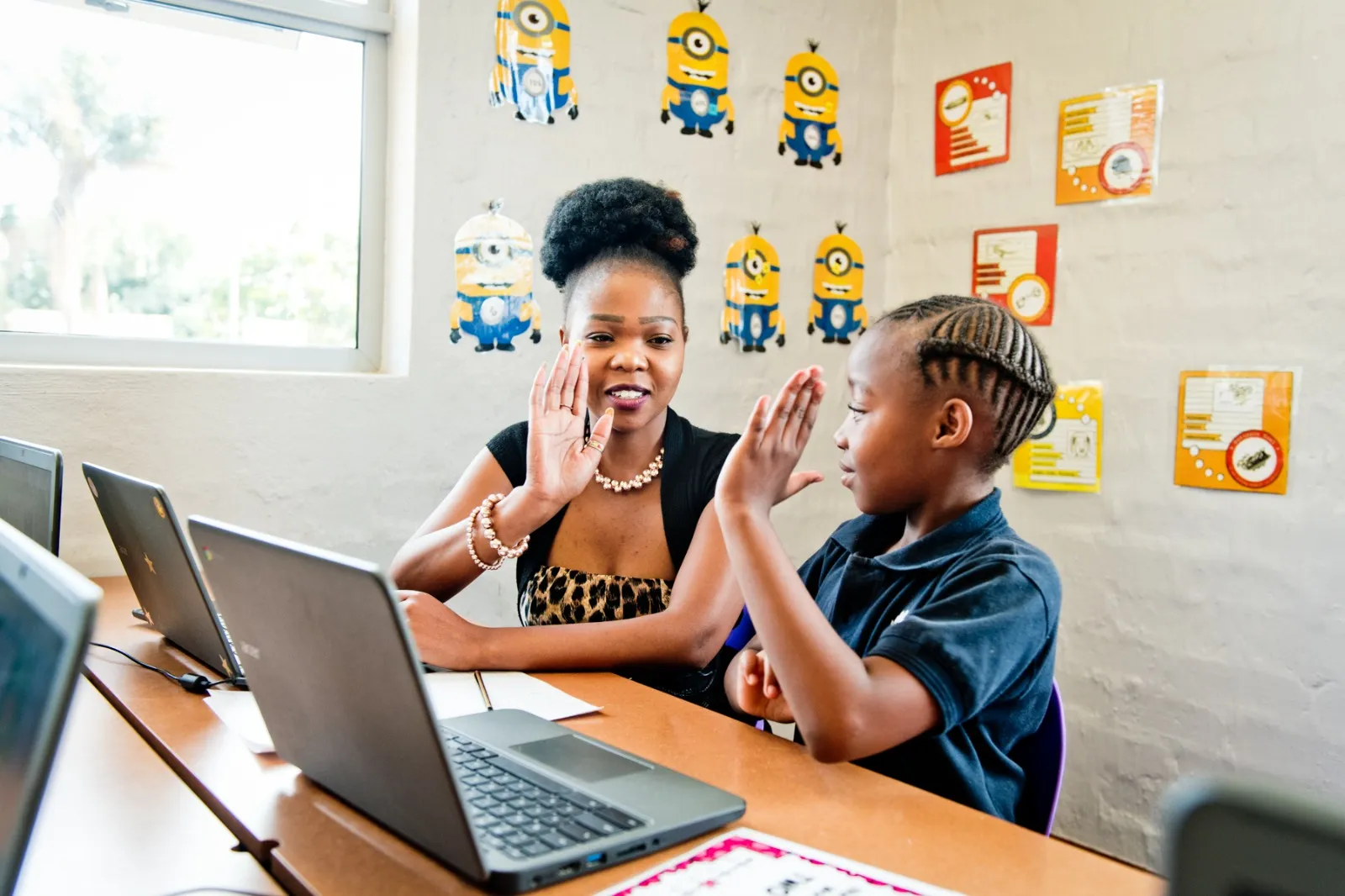
At SPARK Schools, this takes different forms by phase. For example, foundation phase scholars rotate through learning stations in a Lab Rotation model. Meanwhile, older primary scholars move through a Flex Model, which gives teachers more room to regroup scholars using real-time data. Either way, the principle stays the same: teaching adjusts to the child, not the other way round.
When a child is taught slightly above or below their level for too long, motivation suffers before grades do. Specifically, a bored, advanced learner disengages. Meanwhile, a struggling learner falls further behind and starts to believe they are simply "not good at" a subject. Individualised learning aims to catch both patterns early. Therefore, it uses regular, low-stakes checks to keep instruction matched to ability.
This is not a new or untested idea. Indeed, UNESCO's work on quality learning has repeatedly shown that instruction matched to a learner's real level, rather than a fixed pace, leads to stronger and fairer outcomes. This holds especially true for learners who start behind grade level. The logic is simple: a child cannot build on a foundation that was never solid. Therefore, individualised learning is one of the more practical ways to spot and fix those gaps early.
As a result, schools that invest properly in individualised learning tend to see the clearest benefit in early reading and maths. Otherwise, small gaps compound quickly.
Delivering individualised learning well is harder than it sounds. Therefore, parents should be sceptical of any school that claims to offer it without the systems to back it up. At minimum, it needs frequent, meaningful assessment data, not just termly tests. It also needs teachers trained to interpret that data and adjust grouping and pace. Furthermore, it needs a model that allows regrouping within the school day, not just once a term. In addition, where technology is used, it should support the teacher's judgement, not replace it.
SPARK Schools' educators receive substantial training each year specifically for this approach. Individualised learning depends entirely on staff who know how to use it well.
As scholars move into high school, individualised learning shifts shape again. SPARK's Class Rotation and Innovation Hub model for Grades 8 to 12 continues the same idea. Subject specialists pair with data-driven grouping. For example, a scholar who needs more support in mathematics receives it without being held back in subjects where they already excel.
It is worth addressing a common worry directly. Individualised learning does not mean isolated learning. Group work, discussion, and shared projects remain central to the model. The individualising applies to pace and support, not to a child's social life at school. Class discussion, peer collaboration, and the school's Social Emotional Learning curriculum continue alongside it.
When visiting schools, ask specifically how individualised learning works day to day. Ask how often data shapes grouping. Ask how teachers are trained to use it. Ask how the school shows progress for scholars at different starting points. A school with a genuine individualised learning model will give clear, practical answers rather than vague promises about "personal attention."
Individualised learning is one of the most meaningful shifts available in modern schooling. It treats each child as an individual, not an average. If you would like to see SPARK Schools' primary school model in action, our team can arrange a tour or explain how individualised learning would work for your child. You are welcome to apply today to begin the process.